- 46
- 1
- 0
- 0
- 0


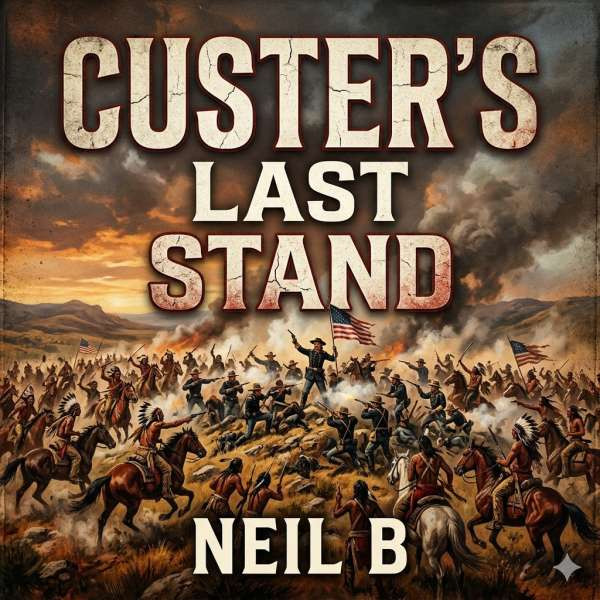
In the blistering heat of the Montana Territory, George Armstrong Custer and the Seventh Cavalry charge toward a destiny that would define the frontier. Driven by a reputation built on audacity and the pressure of a shifting tactical landscape, Custer leads his men into the sprawling, unexpected heart of a Lakota and Cheyenne encampment. From the final, fateful decision to divide his command to the harrowing collapse of his regiment on the high ridges of the Little Bighorn, The Last Horizon captures the explosive culmination of a mission where the hunter became the hunted, forever altering the course of American history
GENERAL CUSTER BIOGRAPHY of Little Bighorn
The Grass at the Little Bighorn
The sun beat down on the Montana Territory, bleaching the buffalo grass until it turned the color of dry straw. It was late June, and the heat rising from the earth shimmered against the horizon. Dust hung in the air, kicked up by thousands of unshod hooves and the steady, rhythmic stride of heavy cavalry mounts. Men wiped their faces with damp, grit-streaked handkerchiefs, their wool uniforms itching against their skin. The scent of pine from the distant hills mixed with the metallic tang of sweat and horse lather.
George Armstrong Custer sat in his saddle, his buckskin jacket stained from the long ride. He was a man defined by the motion around him, his long, golden hair caught by the dry breeze. Beside him, scouts squinted into the glare, their eyes searching the valley for a smudge of smoke or the movement of a pony herd. There was no water, no shade, and the column of Seventh Cavalry soldiers moved with the heavy, exhausted silence of men who had been pushing toward an edge they could not yet see.
Rumors of a gathering had been echoing through the camps for days. The Indian village in the valley of the Little Bighorn was rumored to be the largest assembly of plains tribes in a generation. Some officers whispered that they should wait for reinforcements, that the strength of the combined Lakota and Cheyenne forces was unknown. Others urged the pace, fearing the prey would slip away into the broken landscape of the badlands. A decision hung over the column, suspended in the heat. It was not a grand tactical debate in a marbled room, but a series of hurried exchanges on horseback, while the horses panted and the men looked toward the valley floor.
The pressure mounted as the scouts returned, their reports conflicting. One claimed the village was already aware of their approach, that the element of surprise was lost. Another urged immediate action, insisting that a bold strike would shatter the tribes before they could organize a defense. Custer listened, his face impassive under the brim of his hat. He had built his reputation on audacity. To turn back now would be to admit the impossibility of the mission, to let the chance of a decisive victory dissolve into the dust. He signaled to the trumpeter. The order was given to divide the command. It was a choice that splintered the strength of the regiment, scattering his men across the uneven terrain in a move that relied entirely on speed.
The valley lay ahead, a sprawling maze of river bends and high, sloping ridges. The command split—Benteen to the south, Reno into the valley, and Custer toward the high ground on the right.
The hinge point arrived as the sun reached its zenith. Custer crested a ridge and looked down. He did not see a retreating band of warriors, but a vast, moving city of tepees stretching along the riverbank. The scale of the camp was absolute. Thousands of warriors were already mounting, their horses kicking up great clouds of dust that turned the afternoon sky a bruised, hazy gray. The sound reached him then—not the silence of a hidden enemy, but the low, rolling thunder of a nation gathering for war.
He saw the lines of warriors moving to intercept his position, their feathers bright against the dark grass. He realized then that the maneuver had been reversed. The hunter had become the hunted. Custer gestured to his officers, his voice clipped and sharp. There was no retreat to be had, only the ground they stood upon. He ordered the line forward, a thin, blue thread stretched against the rising tide of figures.
The first volley of arrows arched through the air, followed by the crack of rifles. The horses whinnied, rearing against the smoke, and the men dismounted to form a defensive cluster. The world collapsed into the sound of gunfire and the frantic shouts of soldiers struggling to hold their horses while reloading.
It was finished in the space of an afternoon.
The firing died down, replaced by the wind hissing through the tall grass. A heavy, unnatural stillness settled over the ridge. In the immediate aftermath, there was only the cooling of the metal and the soft, rhythmic breathing of the prairie. The Seventh Cavalry, a force that had been the pride of the frontier, had ceased to exist as a coherent unit. The telegrams would soon begin to move across the telegraph wires, relaying the news of the total loss. It was the last time the army would underestimate the collective military resolve of the plains tribes.
استمع مؤخرا من قبل

لم يتم العثور على تعليقات
المزيد من المسارات