- 75
- 0
- 0
- 0
- 0


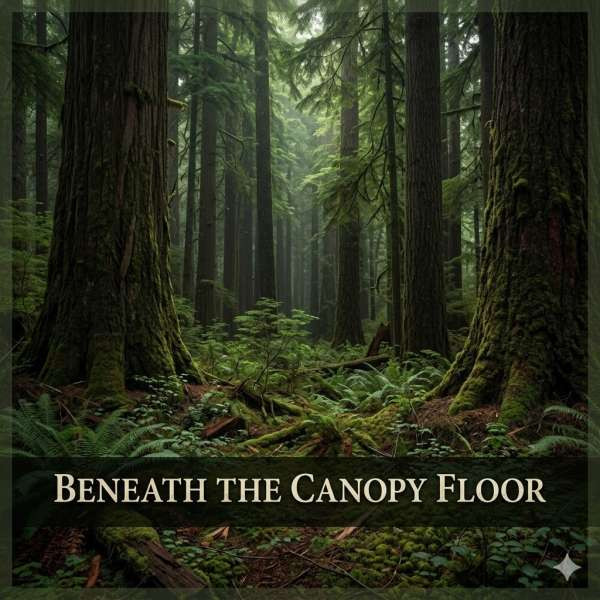
Beneath the silent, emerald canopy of the Pacific Northwest lies a vast, invisible empire. While the giants of the forest compete for light and space above, a sprawling network of fungal threads operates in the dark, acting as a shared nervous system for the entire ecosystem. This is the story of the wood wide web—a world where trees trade resources, send warnings of danger, and nurture their neighbors through an ancient, interconnected pulse. Discover the forest not as a collection of solitary individuals, but as a single, complex intelligence that has been sustaining itself for millions of years
Discover the forest not as a collection of solitary individuals, but as a single, complex intelligence that has been sustaining itself for millions of years...............
The air inside this coastal forest of the Pacific Northwest is heavy, saturated, and cool against your skin. You are standing on a bed of duff, a thick carpet of decaying needles and moss that has been accumulating for centuries. Above, the canopy is so dense that the light which reaches the forest floor is green, filtered, and dim. The silence here is not empty. It is a layering of sounds. There is the persistent, low-frequency drip of condensation falling from the hemlock branches onto the fern fronds below. There is the muffled weight of the fog, pressing against the ancient, silvered trunks of cedar. When you breathe in, the scent is sharp, earthy, and metallic—the smell of wet soil and raw, breaking wood.
The ground beneath your boots is not static. It is a slow, churning engine of transition. A single nurse log, fallen decades ago, is currently being dismantled by millions of microscopic white threads. They are not visible at a glance, but the work is undeniable. You can see the way the bark is curling back, pulled by invisible forces, and how the wood has softened into a crumbling, orange pulp. A patch of tiny, translucent mushrooms has erupted from a fissure in the log, their caps no larger than a fingernail, glistening with moisture as they draw energy from the decaying fibers. They are the only outward sign that a massive, intricate network is pulsing just beneath the surface of the soil.
You lean down to touch the damp earth near the log. The ground feels spongy, yielding under your fingertips. You notice a fine, white spiderweb-like structure threading through the darker soil. It looks like a tangle of coarse, bleached hair. You follow the threads with your eyes as they disappear into the earth, heading toward the roots of a towering Douglas fir. The threads do not stop at the root. They wrap around the fine, hair-like tips of the tree's subterranean system. It creates a seamless, fused junction. You begin to wonder how these delicate, fragile filaments can possibly sustain a tree that weighs several tons and stands two hundred feet into the air.
The answer lies in the physics of surface area. Each of these white threads, known as hyphae, is thinner than a human hair. When they aggregate into vast underground networks, their collective surface area becomes astronomical. These networks act as a massive, living sponge, thousands of times more efficient at mining the soil for phosphorus and nitrogen than the tree roots could ever manage on their own. The fungus cannot produce its own energy from sunlight, so it trades these precious minerals for the sugars the tree creates through photosynthesis. It is a transaction of survival. The tree provides the food, and the fungal network provides the raw materials.
As you watch, you realize the forest floor is not just a collection of competing individuals. It is a single, interconnected body. If you could see the light of the nutrients flowing through these white threads, the ground would look like a highway system of glowing currents. A tree in the sunlight, thriving and full of energy, pumps excess sugar down into the roots. The network carries that sugar, sometimes across hundreds of feet, to a shaded sapling struggling in the deep darkness of the understory. The stronger tree is literally feeding the weaker one through the fungus, keeping it alive during its years of shadow.
The scale of this operation is staggering. A single teaspoon of this forest soil contains miles of these fungal threads. When you stand here, you are not standing on a collection of separate plants and trees. You are standing on top of a massive, shared, biological nervous system. The individual trees are merely the visible tips of a far more expansive and social organism. The forest is not a collection of parts. It is a single, slow, deliberate process of exchange.
Until now, the forest seemed like a place of silent, solitary endurance. You saw trees competing for light, fighting for space, standing alone against the wind. That is the view from above. But beneath your boots, the reality is the exact opposite.
The individual tree is a myth. The reality is that no tree in this grove stands alone. The entire stand is linked by the fungal web, a shared infrastructure that allows the trees to communicate, share resources, and even distribute warnings. When a tree is attacked by insects, it releases chemical signals into the network, alerting its neighbors to harden their defenses and increase their chemical bitterness. The entire stand reacts as a single, coordinated entity. This is not just a forest. It is a sophisticated, ancient, and highly sensitive intelligence. AND IT HAS BEEN OPERATING THIS WAY FOR FOUR HUNDRED MILLION YEARS.
You stand perfectly still. The fog continues to drift between the great, silver trunks, swirling through the ferns. The drip of condensation from the hemlocks continues its rhythmic, steady beat. But the silence has changed. It is no longer the silence of isolation. It is the hum of a vast, unseen conversation, a constant, flickering exchange of chemistry and energy that binds every living thing in this grove together. You are standing in the middle of a colossal, living architecture.
Beneath your feet, the white threads continue their work, moving sugar from the light into the dark, balancing the needs of the old with the growth of the young. The forest is holding itself together. You take a breath, smelling the rich, damp earth, and realize that you are just a temporary visitor, walking across the surface of a world that is far more social, and far more unified, than you ever imagined. A single, cool breeze moves through the cedar boughs, and in the distance, a raven calls. You remain still, listening to the quiet, complex pulse of the soil.
Baru-baru ini Didengarkan oleh
Tidak ada komentar yang ditemukan
Lebih Banyak Lagu